
Vixio Intelligence
To keep up to date on Vixio webinars, events and industry and product news,
sign up today
Subscribe NowB2B supplier licensing is spreading fast. See the three regulatory trends reshaping 2026 and how suppliers build a licensing roadmap instead of firefighting.
If you’re doing research about remaining compliant as a B2B gambling supplier, here are some challenges you might be facing:
It’s not easy to stay on top of things as a gambling supplier. In fact, for many teams, compliance becomes a constant firefight rather than something strategic. The gambling industry moves faster than most legal teams can track, and the cost of falling behind keeps climbing.
That’s why in this article, we’ll share some of the key trends shaping the future of gambling suppliers and how the right tools can help you stay ahead.
Note: looking for a tool to keep you up to date with new regulations relevant to you, can act as one source of truth for 200+ jurisdictions and help you decide which new markets to enter? Book a demo to learn more about how Vixio can help you
Every year, the regulatory landscape becomes more complex, and 2026 is no exception.
Here are three key trends reshaping the future of gambling suppliers, and what you should be doing now to stay ahead.
It’s no longer just B2C operators under the microscope. In a growing number of jurisdictions, B2B gambling suppliers are now required to obtain their own licenses to legally support clients in regulated markets. B2B licensing has gone from a niche concern to a baseline expectation.
This shift is already firmly established in some European markets. Sweden requires licensed game suppliers to work with regulated operators, while Denmark introduced mandatory supplier licensing from 2025, making B2B approval a prerequisite for market access.
But the bigger story in 2026 is how this model is spreading.
This change isn’t just a paperwork exercise, it reflects a regulatory mindset shift. Authorities want direct oversight of every part of the gambling value chain, especially as new markets open and black market activity persists. For B2B providers, that means the application process itself is becoming a strategic project, not a back-office task.
Regulators aren’t just checking for technical compliance anymore, they’re now watching who suppliers choose to do business with. Partnerships that looked harmless five years ago are now front and centre in enforcement action.
Authorities are clamping down on suppliers who support unlicensed or black-market operators, directly or indirectly. This includes everything from hefty fines to public license reviews.
For example, in Sweden, regulators have already fined suppliers found to be working with unlicensed operators. In Romania, B2B companies must report every deal they sign with an operator, giving regulators clear visibility into the supply chain.
In the UK, the Gambling Commission recently put supplier giant Evolution under review, sending a clear message: supporting illegal competition isn’t just bad optics, it’s a business risk.
Licensing is just the beginning. Suppliers now face a patchwork of market-specific technical compliance rules, many of which are being updated frequently and without much warning. Whether you're powering an online casino, a sports betting platform, or a multi-vertical online gaming product, the rulebook keeps shifting under your feet.
Even jurisdictions that appear to follow similar frameworks often introduce subtle, but critical, differences.
This could include game speed restrictions, language localisation, bet limits, user experience rules, or specific display requirements.
For example:
And these requirements are evolving fast. Regulators are tightening controls in the name of responsible gambling, and suppliers need to be ready to adjust or withdraw products quickly if non-compliant.
For a lifecycle view of how these requirements affect product design, certification, launch and ongoing monitoring, read our guide to regulatory compliance in betting software development
As a regulatory intelligence platform covering 200+ jurisdictions and working with 100+ gambling suppliers, we see first-hand how the most successful teams manage compliance, anticipate change, and scale into new markets.
The challenge with licensing and regulation is not just how complex it is, but how fragmented and fast-moving it has become.
Most suppliers are still forced into a reactive approach. You might be manually checking multiple regulator websites, relying on periodic updates from law firms, or piecing together information from different sources, formats, and jurisdictions. None of these methods give you a complete or real-time view, which makes it difficult to know what actually matters, what’s changing, and what requires action.
As a result, compliance becomes something you respond to late, rather than something you plan for. This often leads to rushed applications, missed requirements, delayed certifications, and slower market entry.
What leading suppliers do differently is build a structured roadmap for global licensing, so they can move from reactive to proactive.
This means:
Instead of waiting for regulations to take effect, they identify where licences are required today and where they are likely to emerge next. From there, they prioritise strategically important markets, estimate realistic timelines, and build a pipeline of applications before competitors enter those markets.
To make this approach work, your roadmap should include:
Ideally, you should also be tracking consultations and early regulatory signals, not just finalised laws. This gives you time to prepare documentation, allocate resources, and plan timelines ahead of time, rather than scrambling to catch up.
We’ll share a tool below that helps you do this without relying on manual research or constantly checking regulator websites.
Staying compliant is no longer just about your own operations. Regulators are increasingly looking at the entire supply chain, which means your exposure depends on who you work with and where your products are ultimately used.
That makes visibility critical.
Many suppliers assume that if they are compliant, the risk stops there. In reality, risk often sits further downstream. You could be working with operators who hold licences in one jurisdiction but are actively targeting players in restricted markets. Or your games and platform services could be distributed into regulated markets where your partner does not hold the appropriate local licence.
Without a clear view of your distribution chain, these risks can go unnoticed until enforcement action happens.
That’s why leading suppliers are proactively auditing their client base and distribution channels to understand exactly where and how their products are being deployed.
When carrying out this audit, you should:
To avoid being caught off guard, it’s also important to monitor changes over time. This includes setting up regular reviews or alerts for:
The key shift is this: It is no longer enough to track your own compliance. You need full visibility of your supply chain, so you understand not just what you do, but what you enable.
Keeping track of technical compliance requirements across multiple jurisdictions is one of the most resource-intensive parts of being a gambling supplier.
When done manually, it quickly becomes unmanageable. Teams end up checking regulator websites, reviewing lengthy legal documents, and trying to piece together updates from multiple sources. The result is a fragmented view of requirements, where important changes can be missed and time is lost on low-priority noise.
As regulatory complexity increases, this approach doesn’t scale.
That is why more suppliers are moving towards dedicated tools or compliance partners that centralise technical requirements and monitor changes in real time.
The goal is simple: give your team a single, reliable source of truth, and ensure you only focus on the updates that actually matter to your business.
The right solution should provide:
With this kind of setup, your team can operate from a single source of truth, reduce reliance on external advice, and most importantly, avoid missing critical requirements that could delay launches or create regulatory risk.
For a fuller breakdown of what teams need to monitor and how to turn alerts into action, read our guide to managing iGaming regulatory updates.
Below, we explain how Vixio delivers this in practice, and why leading gambling suppliers and operators rely on it to stay compliant.
Vixio is a regulatory intelligence platform that helps gambling, payments, and financial services businesses monitor regulatory change, reduce risk, and act with confidence.
For nearly two decades, Vixio has supported compliance and legal teams in navigating complex, fast-changing regulatory environments. By combining expert analysis with automation, the platform turns fragmented, hard-to-track requirements into clear, actionable insight, enabling faster decisions and more controlled execution.
In the gambling sector specifically, Vixio works with over 100 suppliers, providing coverage across 200+ jurisdictions and mapping thousands of technical compliance requirements. This gives suppliers a comprehensive, up-to-date view of the rules that impact their products, operations, and market expansion plans.
Here’s why suppliers choose to work with Vixio:
One of the biggest challenges in gambling compliance is how fragmented the information is.
Regulations are spread across multiple regulator websites, buried in lengthy legal documents, and often published in different formats and languages. Pulling this together manually takes time, introduces risk, and makes it difficult to get a clear, consistent view of what actually applies to your business.
Vixio solves this by giving you one centralised platform that brings everything together in a structured, easy-to-use format.
Within a single view, you can access licensing requirements, technical compliance rules, and regulatory updates, all translated from complex legal text into clear, actionable insights.
In practice, this gives you full visibility of online gambling technical requirements across 50+ jurisdictions, and enables you to:
With Vixio, you only see the updates that matter to you.
For example, you can filter regulatory updates by jurisdiction, document type, and topic.
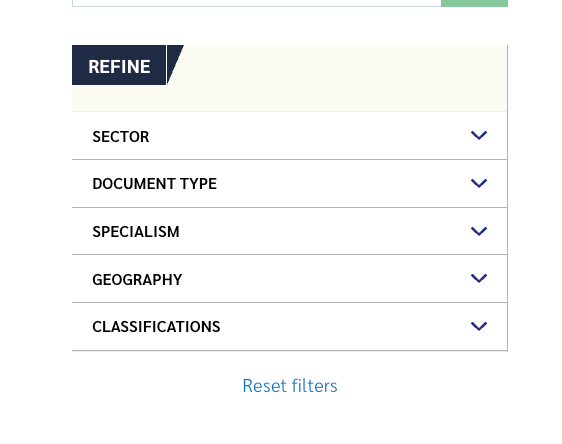
Every update is linked back to the original source, so you can always verify the detail and explore the full context when needed.
The challenge is not finding regulatory information. There is no shortage of it.
Regulators, government bodies, and authorities publish updates every day across hundreds of sources. The real difficulty is understanding which of those updates actually matter to your business, and what you need to do about them.
Without structure, even automated alerts can create more work. Instead of manually searching for updates, you end up sorting through a constant stream of notifications, trying to identify what is relevant, what is urgent, and what can be ignored.
This is where structured prioritisation becomes critical.
Vixio categorises every regulatory update so your team can quickly filter, assess, and act based on impact:
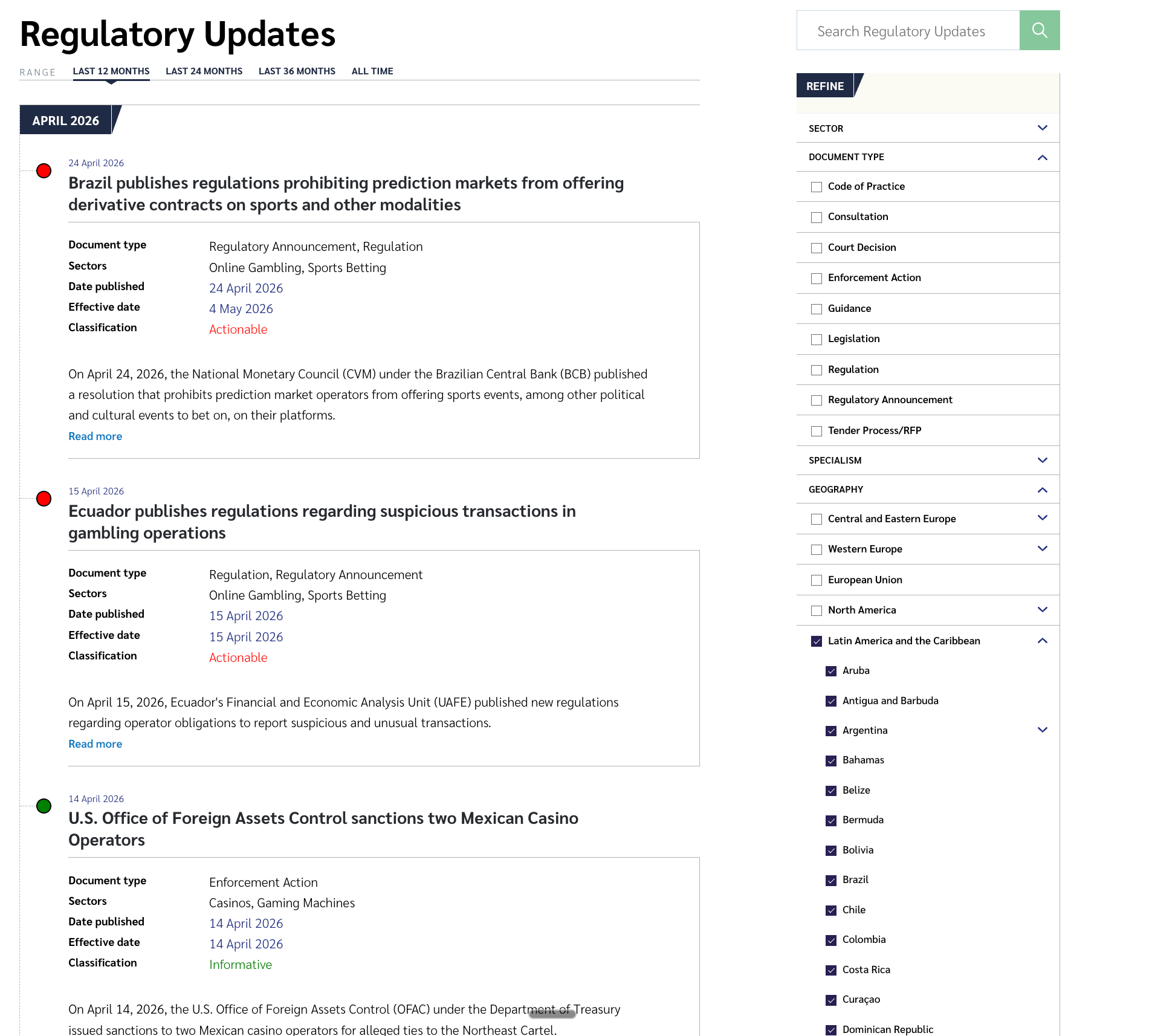
With this level of prioritisation, your team no longer has to interpret every update from scratch.
Instead of spending time sorting through noise and second-guessing what matters, you can rely on a structured system that highlights what needs attention, what to monitor, and what can simply inform your wider understanding of the regulatory landscape.
The result is less time spent reacting to information, and more time making confident, informed decisions.
When evaluating a new market, the decision is not just commercial. For B2B gambling suppliers, it heavily depends on whether your platform, features, and infrastructure can meet local technical and regulatory requirements.
Before committing engineering resources or budget, you need a clear understanding of what compliance will actually involve.
This is where Vixio’s Technical Compliance Tool comes in.
It allows you to compare technical, certification, and regulatory requirements across 50+ jurisdictions, giving you a clear picture of what is needed to operate in each market.
Specifically, this enables you to:

For B2B suppliers, this provides much-needed visibility into the true complexity of each market before making investment decisions. It allows you to prioritise opportunities more effectively and move faster with confidence.
In addition, Vixio provides a centralised view of regulatory risk across jurisdictions, helping you understand your exposure at a glance. Built-in workflows and compliance tracking tools also make it easier to assign tasks internally and respond quickly when new requirements emerge.
As more jurisdictions open up to gambling, the regulatory burden on suppliers continues to grow. New markets bring new licensing requirements, technical standards, and ongoing obligations, all of which vary significantly from one jurisdiction to another.
Keeping up with these changes, understanding how they apply to your business, and assessing whether a market is worth entering is becoming increasingly complex.
Without the right systems in place, compliance can quickly become a bottleneck to growth.
A tool like Vixio helps you stay ahead of this complexity. By centralising regulatory intelligence, automating updates, and providing clear, actionable insights, it allows your team to save hundreds of hours, avoid missed deadlines, and make faster, more confident decisions about where and how to expand.
Book a demo here to learn more: Request a Demo
Increasingly, yes. Many jurisdictions are moving towards requiring B2B suppliers to hold their own licences or meet specific certification and technical standards. Even in markets where full supplier licensing is not yet mandatory, regulators are tightening oversight, which means suppliers still need to meet strict compliance requirements to operate.
The main challenges are keeping up with constant regulatory change, managing different requirements across multiple jurisdictions, and ensuring your products meet local technical standards. On top of that, suppliers now need visibility across their entire distribution chain, as regulators are increasingly holding them accountable for who they work with.
The most effective approach is to combine proactive planning with the right tools. This includes building a global licensing roadmap, monitoring early regulatory signals, and using a centralised compliance platform that provides real-time updates, prioritised alerts, and clear guidance on what actions to take.
Suppliers need to assess both commercial opportunity and regulatory complexity. This means understanding licensing requirements, technical obligations, certification processes, and the level of engineering effort required. Tools that allow you to compare jurisdictions side by side can help you identify lower-risk, high-potential markets and prioritise expansion more effectively.



.png)