Vixio Intelligence
To keep up to date on Vixio webinars, events and industry and product news,
sign up today
Subscribe NowSee which compliance tasks can be automated — monitoring, triage, obligations and audit trails — and where human judgement still needs to sit.
If you're responsible for compliance at a business in the payments, gambling, or financial services space, you're probably aware that your team is spending too much time on tasks that could be automated, such as:
All of this is achievable with automated compliance solutions. But finding the right solution for your business isn't straightforward, and the wrong tool for the wrong problem just moves the manual work somewhere else.
This guide explains what compliance tasks can actually be automated to streamline your compliance workflows, which categories of tools exist, and how to get started.
In this article:
Vixio is a unified regulatory change management platform built for compliance teams in gambling, payments, and financial services. Book a demo to see how it works for your specific compliance needs.
Here are six main areas where software can replace or significantly reduce manual work.
Horizon scanning tools help your team stay up to date with new laws, rule changes, guidance, and enforcement activity across every regulator and jurisdiction relevant to your business.
Instead of needing to manually check regulator websites, you can rely on automated monitoring. These tools enable continuous monitoring of regulatory sources, and deliver a filtered feed of what’s changed.
The best monitoring tools offer precise filtering, calibrating your feed to your specific licence types, regulatory bodies, and business lines. That way, only relevant updates reach your feed, rather than receiving a static checklist. This is critical, since a tool that surfaces everything, regardless of relevance or priority, just creates a different kind of manual work. You go from spending time finding the information, to spending time filtering out what's relevant.
Instead of spending time each morning checking multiple sources, an automated monitoring tool delivers a pre-filtered feed of what changed overnight, saving you valuable time and energy.
Labour-intensive compliance activities like making sense of regulatory changes involves working out which ones require immediate action, which need closer monitoring, and which are simply useful context.
Good triage tools help by categorising every update by urgency and relevance, personalised to your businesses specific compliance requirements. That way, your team knows exactly what to act on before they've read a single document.
For example, a new ESMA guideline could land on the same day as a minor technical update from a secondary agency. Without triage, both sit in the same inbox. But with prioritisation, the ESMA guideline is flagged as requiring immediate action and surfaces at the top. Meanwhile, the technical update is categorised as informational and can be reviewed later.
Let’s say a new AML regulation lands and runs 80 pages long, and you need to sift through them all to find the five clauses that apply to your business model. Without automation, that means reading the whole document.
This is the reality for many compliance professionals, since regulatory documents are long, complex, and rarely written in plain English. Requirements extraction tools let you interrogate source legislation and pull out only what applies to your business.
Regulatory documents are long, complex, and rarely written in plain English. When you're operating across multiple jurisdictions, the problem compounds. Then, you're dealing with different languages, legal structures, and sources all at the same time.
Requirements extraction tools let you interrogate source legislation across all of them and pull out only what applies to your business, building a structured Obligations Library your team can search and reference.
When a regulation changes, you need to quickly answer two questions:
Gap analysis and risk assessments compare your current obligations against incoming regulatory change and surfaces exactly where the gaps are.
Requirements extractions might answer the "what does this mean for us?" part of the equation, but gap analysis is critical to answer "what specifically do we need to change, and by when?"
This is where automation bridges the gap between intelligence and decision-making, helping your team prioritise the response before deadlines arrive rather than scrambling to catch up after them.
For example, a payment institution might receive an alert that safeguarding rules are changing in the EU. Rather than manually mapping the new rules against existing policies, Gap Analysis compares the incoming requirements against current obligations and surfaces exactly what corrective actions need to be taken before the implementation deadline.
Many compliance teams monitor regulatory change in one system and manage the response in another, relying on email, Slack, or spreadsheets. That means no central record of ownership, effective deadline tracking, or reliable audit trail.
Workflow automation tools let you create a task directly from a regulatory update, with an owner, a deadline, and a permanent link back to the source. Everything is tracked through to completion in one place, with a defined audit trail that builds itself as your team works.
Here’s what this looks like in practice:
Regulatory mapping connects each obligation to the specific business unit, product, or control that satisfies it, creating a traceable chain from regulation to action. Reporting tools then generate output showing compliance status automatically, rather than as a manual project assembled under pressure.
Ahead of an internal audit, that means your compliance team can use dashboards to produce a complete picture of every regulatory obligation, who owns it, what controls are in place, and the status of any open actions.
Vixio is a unified regulatory change management platform that supports all six of these automation capabilities in one connected environment. Book a demo to see how it works for your specific markets and licences.
Regulatory change management (RCM) is the process compliance teams use to identify new or updated regulations, assess their impact, implement the necessary changes, and maintain evidence of compliance over time.
The process breaks down into five stages:
A regulatory change management platform can bring everything together so you can monitor regulatory change, identify what applies to your business, assess the impact, implement the necessary changes, and maintain a complete audit trail all in one place.
Most compliance teams have a fragmentation problem with compliance management. They're using one tool to monitor regulatory updates, a spreadsheet to track what needs to happen, email to assign tasks, and a separate folder to store evidence. Each tool works in isolation, and nothing connects.
A regulatory change management platform solves this by bringing every stage of the process into one environment and connecting fragmented existing systems.
That way, intelligence flows directly into action, and every action builds the audit trail automatically.
When compliance tools don't connect, the gaps between them become a significant source of risk, creating compliance vulnerabilities that are difficult to detect:
The more jurisdictions you operate in, the more those gaps compound. A team managing two markets might just about cope with a fragmented approach, but a team managing five can’t: it’s a compliance effort that’s just not sustainable.
A regulatory change management platform closes gaps between disconnected systems, strengthens overall compliance posture, and ensures nothing slips through the cracks.
Instead of compliance being a series of manual processes and handoffs between disconnected tools, it becomes a single connected workflow.
From the moment a regulatory update is published to the moment the compliance response is evidenced and filed. Every step is linked, and every action is traceable. Nothing falls through the cracks because there are no cracks.
That shift is what allows compliance teams to move from reactive to proactive, because the system is doing the connective work that used to require constant manual intervention.
Vixio is a unified regulatory change management platform, which means it goes beyond a basic monitoring tool.
Vixio supports the full five-stage RCM process in one connected and automated environment. The platform has been tracking global regulatory change for nearly 20 years, trusted by 500+ organisations including Visa, Worldpay, Wise, and SumUp. It combines AI-powered monitoring with specialist analyst expertise.
Here’s how Vixio can help automate and optimise your entire compliance process:
Most compliance automation platforms surface information, but many fail to help teams understand what emerging regulatory changes mean and what they need to do next.
Vixio's approach both surfaces information and provides that essential context your team needs to take next steps. Here’s how it works:
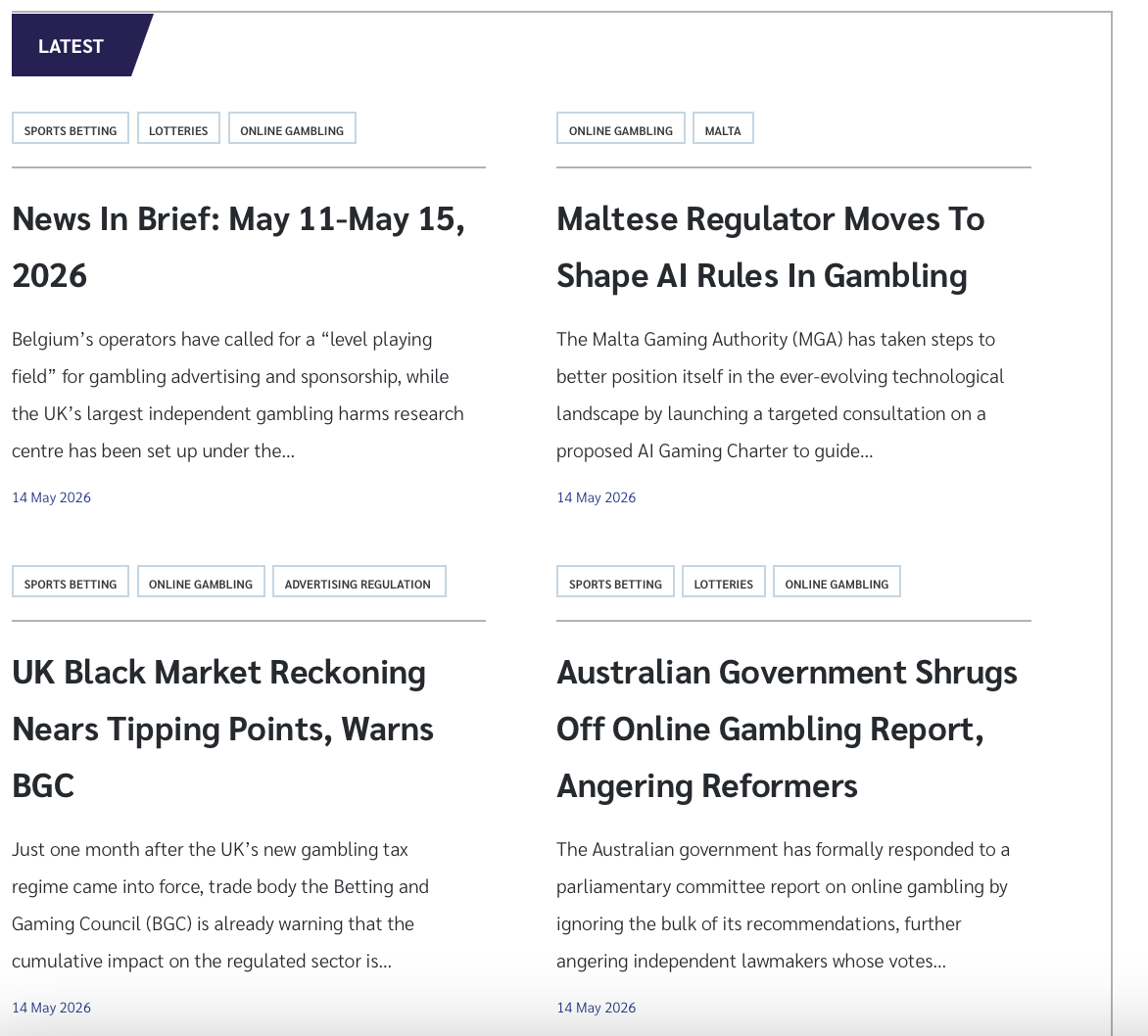
Automation that surfaces everything is only marginally better than monitoring changes manually; either way, your team is drowning in reviewing regulatory changes and spending time determining what actually matters. The volume problem doesn't go away unless the filtering is actually calibrated to your business.
Vixio's Smart Inbox assigns every update an Actionable, Indicative, or Informative classification, giving compliance teams real-time visibility on what needs to be done. These classifications are personalised to each firm's specific licences, jurisdictions, and business lines.
For example, a new FCA enforcement action affecting payment institutions would be flagged as Actionable. Meanwhile a consultation paper on a future policy change would be categorised as Indicative, which is something to monitor and doesn’t need to be acted on immediately.
That means your team arrives at work knowing exactly what needs attention that day (and what can wait).
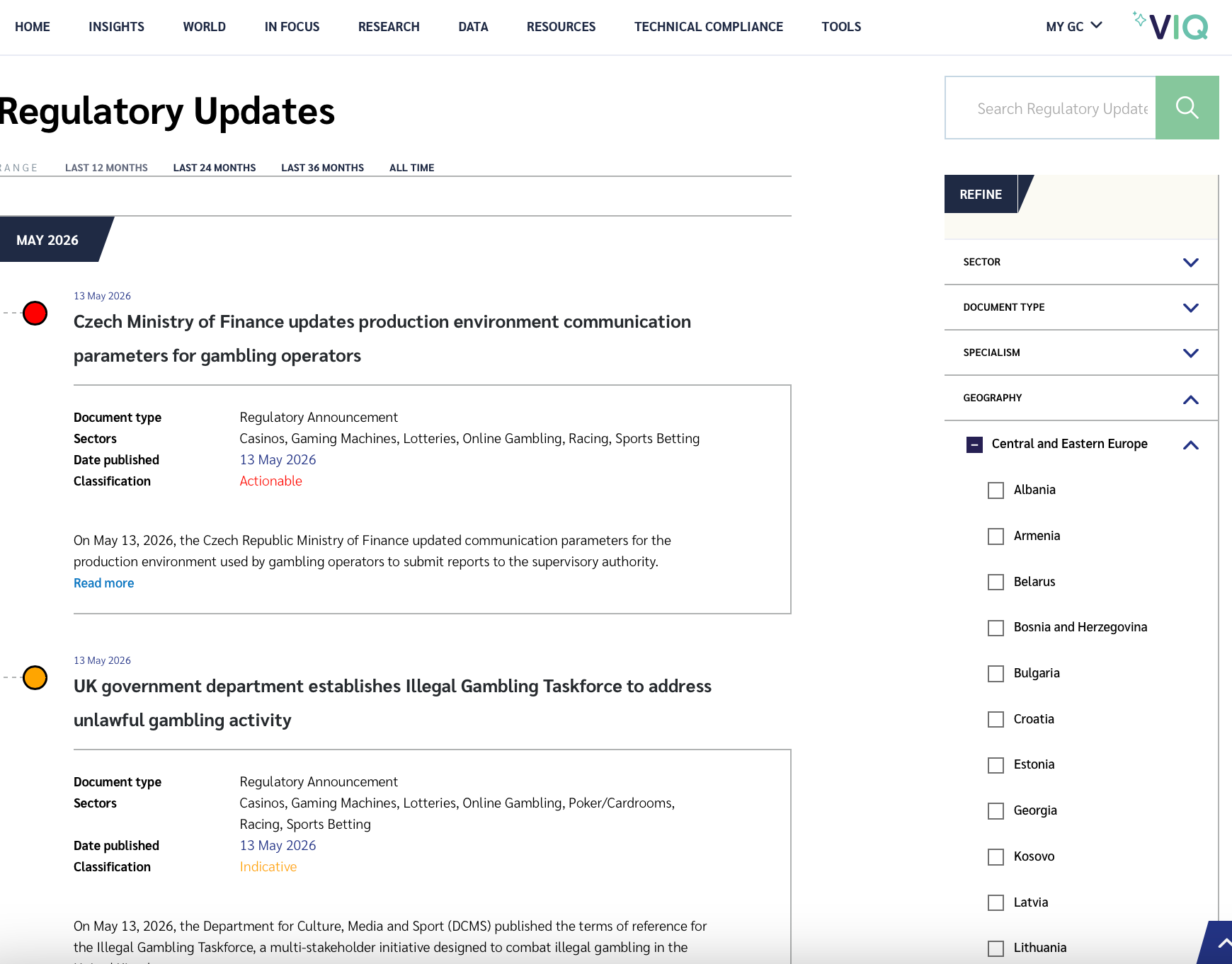
Most teams monitor regulatory change in one system and manage the response in another. When this happens, context gets lost, ownership is unclear, and audit evidence typically has to be assembled under pressure.
Vixio supports the RCM process in one connected environment:

And importantly, every step is linked back to the original regulatory source, giving you full context and auditability. The audit trail builds automatically as teams work, so when a regulator asks for evidence, the answer is already there.
Generic compliance automation tools cover everything at a surface level. A platform adapted from a broad financial services product can miss the licence-type nuance, secondary agency publications, and enforcement patterns that create real compliance risk in gambling, payments, and financial services.
Vixio was built specifically for these three verticals. Our specialist analyst teams who understand the specific regulatory bodies, licence types, and enforcement patterns that matter. The feed is calibrated to your vertical from the outset, giving you the expert analysis your team can count on to stay compliant and make essential strategic decisions.
Vixio is trusted by 500+ organisations across gambling, payments, and financial services, from B2B game studios to global fintechs managing compliance across dozens of jurisdictions at once:
“A lot of man hours are saved, which allows me to focus on more interesting, strategic tasks… it would take so much time if we had to do it ourselves manually. So many resources would need to be put into this instead of what I do now.” — Carl Ørnstrup, Business Development Manager at Mindway AI
Vixio gives compliance teams in gambling, payments, and financial services a more scalable way to manage regulatory change. The platform combines AI-powered monitoring with analyst expertise calibrated to your specific vertical, and a connected workflow that turns every regulatory update into a managed, auditable compliance task.
The result is a compliance function that spends less time firefighting and more time driving the business forward.
Book a demo to see how Vixio automates your regulatory change management process and helps your team move from reactive monitoring to proactive, confident compliance.
Compliance automation is the use of software to replace or reduce manual compliance tasks and support a more scalable compliance program. In regulatory change management, this includes automatically:
For compliance teams, the goal is not just to save time, but to reduce human error, strengthen compliance management, and create a more consistent process for tracking regulatory change.
GRC, or governance, risk, and compliance, platforms typically manage existing obligations, controls, compliance frameworks, and risk management processes.
Regulatory change management platforms, meanwhile, identify what is changing and help teams act on it.
The two are complementary and many businesses use both, but they solve different problems. GRC tells you where you stand today, while regulatory change management tells you what's moving and what you need to do about it.
Platforms like Vixio require no IT integration and can be up and running quickly. The next step is configuration, including setting up watchlists, defining the jurisdictions and licence types that matter, and aligning the feed to the firm's specific regulatory footprint.
For many compliance teams, this is much lighter than implementing broader compliance management software. Many teams can start improvements in compliance operators within days of going live, especially when the platform is focused on regulatory change rather than a full policy management or controls implementation project, which can take longer.
AI alone isn't sufficient for most regulatory change management use cases. AI is genuinely useful at gathering and filtering content at scale. What it can't reliably do is:
Platforms that use specialist analysts as part of the core intelligence process, not just as a quality check on AI output, consistently deliver more actionable intelligence than automation-only models. This is especially important for compliance teams managing complex regulatory requirements, non-compliance risk, and cross-functional stakeholders.
Regulatory change management (RCM) is the process compliance teams use to identify regulatory changes, assess their impact, implement the necessary changes, and maintain evidence of compliance over time.
Without compliance automation software like Vixio, this relies on:
With automation, each stage is supported by tools that surface what matters, connect monitoring to action, and build an audit trail automatically as teams work. This helps compliance teams move closer to continuous compliance by making regulatory monitoring, impact assessment, workflow management, and audit evidence part of one connected lifecycle.