Vixio Intelligence
To keep up to date on Vixio webinars, events and industry and product news,
sign up today
Subscribe NowLearn how to conduct a regulatory gap analysis. See when to run one, what steps to follow, and how Vixio helps teams close compliance gaps faster.
For iGaming businesses, payments firms, and financial services companies, regulatory change is never-ending.
Routinely conducting regulatory gap analyses is what separates teams that stay ahead of change from those that are always catching up.
It's not just about avoiding enforcement action, either. Staying ahead means your team can move on opportunities, like entering a new market or launching a new product, without regulatory compliance becoming a bottleneck.
But identifying a gap exists is only the first step. You also have to understand what a regulation requires, coordinate with the right people to determine next steps, and then implement and document every action taken. That's where the process gets complicated, particularly for smaller compliance teams already stretched across multiple markets and jurisdictions.
This guide walks through what a regulatory gap analysis is, as well as when and how to conduct one. We’ll also dive into where the process gets challenging and the tools that make it easier.
In this guide:
Vixio is a unified regulatory change management platform built for iGaming, payments, and financial services. With coverage across 200+ jurisdictions, expert analyst reporting, and built-in workflow management, we bring everything your team needs to identify gaps and close them in one place. Request a demo today.
A regulatory gap analysis, sometimes called a regulatory compliance gap analysis, compares your organisation's current obligations against incoming regulatory changes and the regulatory frameworks that apply to you, to identify "gaps" where your existing policies, processes, or controls fall short of what will soon be required. Depending on your sector, this might mean checking readiness against regulatory standards and frameworks like GDPR, SOC 2, and ISO 27001.
The goal is to surface those gaps early enough to act on them. You want to efficiently understand what needs to change, assign responsibility, and implement updates before a new regulation takes effect or an audit lands.
Generally, a proactive and scheduled review is better than a reactive one. After all, getting caught for non-compliance – whether by an auditor, customer due diligence request, or your own leadership – is the scenario a gap analysis is meant to prevent.
In practice, most organisations benefit from a combination of two approaches:
Scheduled reviews. Conducting a gap analysis annually or biannually can help ensure no major gap goes unnoticed. Each cycle, you could focus on core policies and the highest-risk areas (such as those most likely to attract enforcement) or rotate scope to apply a fresh lens to a different part of the business.
Event-triggered reviews. Certain developments should prompt an immediate gap analysis regardless of schedule:
Scheduled reviews keep you consistently on track, while event-triggered reviews kick in when your risk is most likely to change.
Once you've decided to run a gap analysis, you’ll want to:
Once this is done, the next challenge is actually implementing the change. This is where regulatory change management platforms like Vixio come in. Keep reading to learn more about how they can help.
While it’s easy to lay out the steps as a clean checklist, in reality, each stage comes with challenges that compound as you add markets, teams, and regulatory volume. Here are the main difficulties:
For iGaming businesses, payments firms, and financial services companies, there can be serious consequences for non-compliance. A missed gap can mean a revoked license, a regulatory fine, restricted access to a key market, exposure to data breaches, or a public enforcement action that causes reputational damage and harms relationships with partners and customers. Closing gaps quickly is how you mitigate risk before it reaches that point.
Vixio is a unified regulatory change management platform that brings regulatory updates, expert analysis, and compliance workflows into one place. Built for iGaming, payments, and financial services, and grounded in two decades of editorial intelligence, the platform is designed to take the manual work out of regulatory change management.
Here's how we support each stage of the process:
Staying on top of regulatory developments across multiple jurisdictions is one of the most time-consuming parts of the gap analysis process and one of the easiest places for something to slip through.
Vixio monitors regulatory change across 200+ jurisdictions from 1,400+ regulatory authorities and 6,200+ vetted regulatory sources. Processing thousands of updates daily, we filter out up to 80% of irrelevant noise for you using supervised machine learning models validated by 20+ global analysts. This gives you a single source of truth for relevant regulatory updates, with new rules, amendments, and consultations surfaced as they occur.
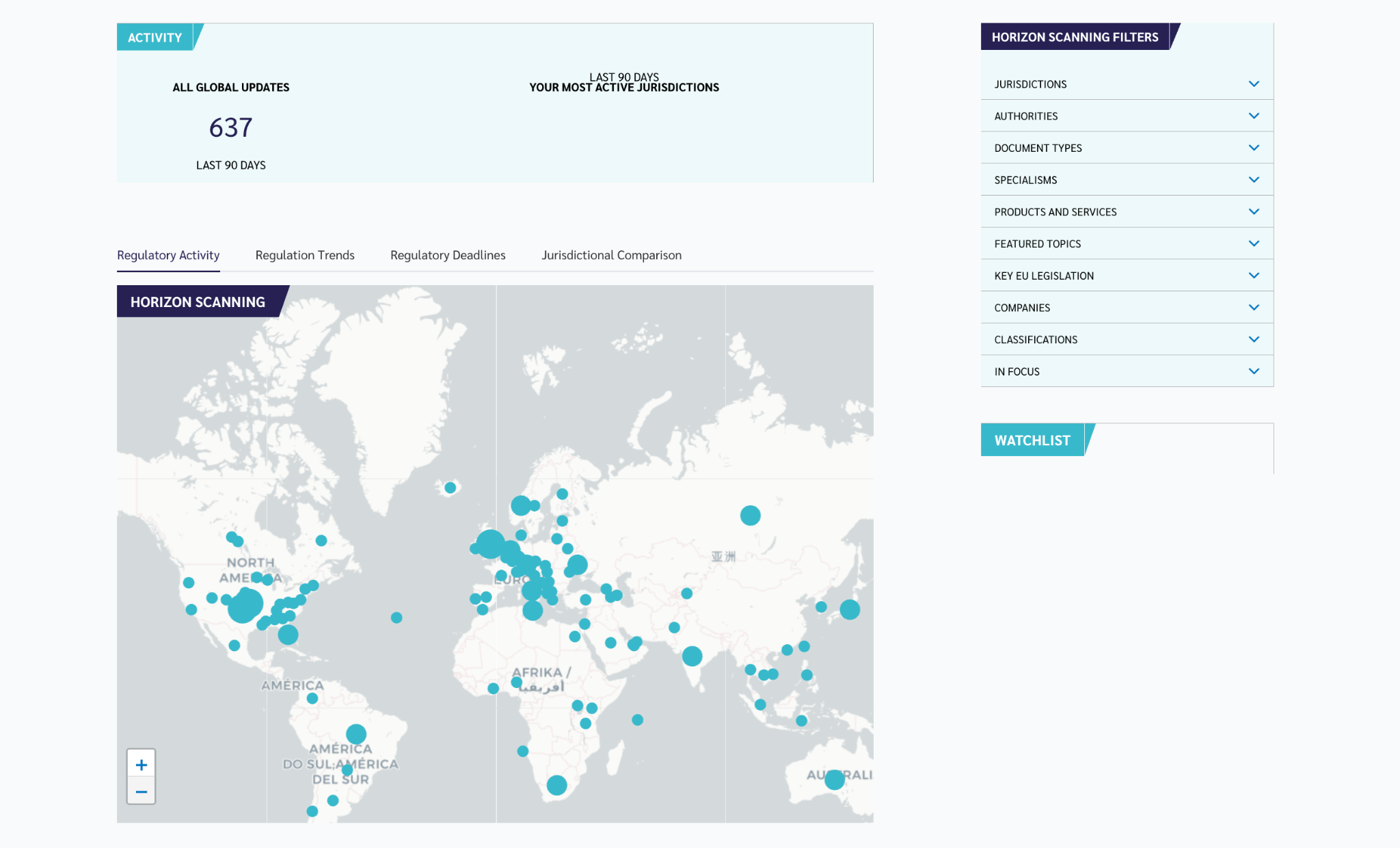
Updates are labeled by market, product, specialism, and more, as well as colour-coded to show you what's actionable, indicative, or informative. Plus, with our Triage tool, updates surface automatically and are filtered based on your watchlists, regions, and compliance focus.
For teams covering a broad geographic scope, interpreting the raw regulatory text of every update in-house – on top of their other responsibilities – isn't always feasible.
With Vixio, you get more than the update itself. Analyst-authored reports break down what each new update means, what it requires, and what firms need to do. You can also reference our country reports, which consolidate the obligations of each jurisdiction and link back to original sources for easy verification.
If you want faster answers, VIQ, our AI regulatory assistant, lets you query Vixio’s verified intelligence directly, whether to ask about compliance obligations, upcoming changes, or clarification on a regulation.

Closing the gaps between the current compliance state and upcoming regulations is where manual processes tend to break down.
With Vixio, you can manage the entire remediation process in the same platform where the regulatory update was first surfaced. Our workflow management tools let you create tasks, assign ownership, set deadlines, and track each action through to sign-off, with a built-in audit trail that documents every step.
Regulatory Mapping lets you link obligations to specific business units, products, and controls, so your compliance framework is traceable rather than assumed. And when it’s time to report, configurable reporting means you're pulling from a single source of truth rather than assembling it manually.
Vixio’s combination of monitoring, analysis, and workflow tools is what helped Bragg Gaming Group manage compliance across more than two dozen jurisdictions.
For Chief Legal and Compliance Officer, Tommaso Di Chio, keeping pace with regulatory change across that many markets while preparing accurate reporting for leadership and the board was a significant operational challenge. Vixio changed that.
"I would recommend Vixio to anyone doing our job in the gaming and payment or FinTech industry," said Di Chio. "It is quite relevant to the highly regulated environments in which we work every day."
With Vixio, the gaming company has been able to cut the time spent researching, interpreting, and presenting regulatory changes. Using the platform’s customisable market and vertical filters, Di Chio can zero in on the jurisdictions that matter and export structured reports directly without having to compile the information himself.
The results have been tangible: less time on research, faster understanding of what changes mean, and easier upward reporting.
Learn more about how Bragg uses Vixio.
A regulatory gap analysis is only as useful as what comes after it. While identifying gaps is the essential starting point, the harder work is moving quickly enough to close them, coordinating the right people, and maintaining a clear record of what you did.
For compliance teams operating across multiple markets with limited bandwidth, bringing monitoring, analysis, and workflow management together helps ensure nothing falls through the cracks. Whether you're running a gap analysis for the first time or looking to make an existing process more efficient, Vixio can help you go from regulatory update to market readiness.
Get in touch with our team to see how Vixio can support your regulatory gap analysis process.
A regulatory gap analysis compares your organisation's current obligations against incoming regulatory changes to identify where your existing policies, processes, or controls fall short of what will soon be required. The goal is to surface those gaps early enough to act on them by the time a new regulation takes effect or an audit lands.
A regulatory gap analysis looks only at whether you comply with external regulations imposed by government bodies and regulatory authorities and whether you’re prepared for upcoming regulatory changes once they take effect. A compliance gap analysis looks at whether you're meeting external regulations, as well as internal policies, industry standards, and contracts.
A risk assessment evaluates the likelihood and impact of a broad range of risks across your business, such as operational, financial, reputational, and more. A regulatory gap analysis is narrower in scope: it specifically compares your current obligations against incoming regulatory requirements to identify where you need to make changes.
Most organisations benefit from a combination of scheduled reviews (annually or biannually) and event-triggered reviews prompted by developments like a known regulatory change, a merger or acquisition, a significant enforcement action, an upcoming audit, or entry into a new market.
While compliance teams typically lead the process, closing the gaps usually requires input from across the business – legal, engineering, product, operations, leadership – because the changes a gap analysis surfaces often touch policies, products, and processes outside compliance's direct control.