
Vixio Intelligence
To keep up to date on Vixio webinars, events and industry and product news,
sign up today
Subscribe NowDiscover how regulatory intelligence platforms like Vixio combine workflow management, regulatory monitoring, and audit trails to simplify compliance.
Regulatory intelligence tools that include workflow management and audit trails include platforms like Vixio. Unlike lightweight monitoring platforms that only provide alerts or news feeds, these systems combine regulatory intelligence with task management, ownership tracking, and audit-ready documentation.
That distinction matters more than ever. In highly regulated industries like financial services, life sciences, and gambling, simply knowing a regulation changed isn’t enough. Compliance teams also need to demonstrate how they responded, who reviewed the update, what actions were taken, and when those actions were completed.
That’s why modern regulatory intelligence (RI) platforms increasingly combine regulatory monitoring with workflow automation and audit traceability.
Since we’re writing the article, we’ll tell you more about Vixio.
Vixio is an AI-powered, analyst-curated regulatory change management platform built specifically for iGaming, payments, and financial services teams. Our platform combines expert-backed regulatory intelligence with integrated workflows, regulatory mapping, and audit-ready reporting.
Teams can use it to:
Vixio continuously monitors more than 1,400 regulatory authorities across 200+ jurisdictions. Every user has a personalised Triage Queue that filters updates by jurisdiction, business line, and relevance. This helps ensure regulatory intelligence reaches the right people without unnecessary noise.
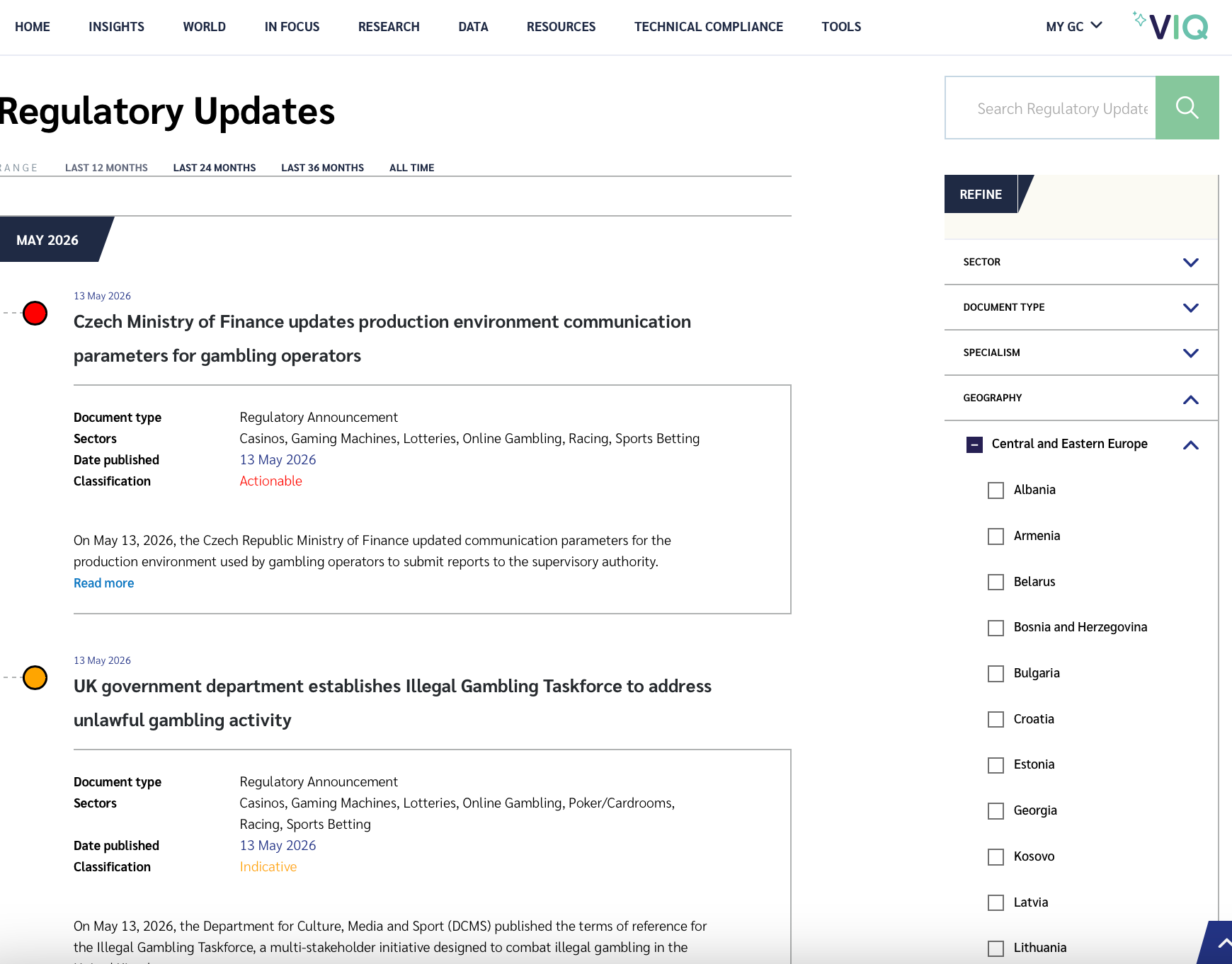
Colour-coded prioritisation helps teams quickly identify what’s actionable versus informational, while the Requirements Extraction tool further simplifies review by pulling practical obligations directly from source legislation.
Most importantly, teams can use Vixio’s workflow management tools to assign regulatory updates directly to individuals within the platform, complete with:
Every action is automatically logged in a built-in audit trail, helping teams stay inspection-ready and demonstrate compliance processes during audits or regulatory reviews.
Monitoring regulatory updates is only part of the challenge for compliance teams. You also need a reliable way to assess impact, assign ownership, track progress, and maintain a clear audit trail showing how every regulatory change was handled.
That’s why more organisations are moving beyond monitoring-only tools and adopting platforms that combine regulatory intelligence with workflow management and audit-ready documentation.
Vixio helps iGaming, payments, and financial services teams manage regulatory change from initial alert through to documented action. With continuously monitored and analyst-verified intelligence, workflow tools, and built-in audit trails, teams can reduce manual tracking and stay audit-ready across jurisdictions.
Book a demo to see how Vixio works.
Workflow management means the ability to assign, track, and complete compliance tasks linked to regulatory updates. It replaces manual tracking with structured processes inside the platform, including ownership, deadlines, and status tracking. This ensures regulatory changes are actively managed rather than just recorded or monitored.
Audit trails provide a clear record of how regulatory changes were handled. They show who reviewed an update, what decisions were made, and what actions were taken. This documentation is important for internal governance and external inspections because it demonstrates accountability and consistent compliance processes.
Industries with heavy regulation, such as financial services, pharmaceuticals, life sciences, MedTech, and gambling, benefit most. These sectors operate across multiple jurisdictions and face frequent regulatory change. They need structured systems to manage accountability, documentation, and audit readiness at scale.
Traditional tools mainly notify users about regulatory updates. Modern platforms go further by helping teams assess impact, assign tasks, manage workflows, and maintain audit trails. The focus shifts from awareness to execution and documented compliance.
Companies should consider regulatory coverage, workflow capabilities, audit trail functionality, and industry relevance. It also helps to evaluate how well the platform supports impact assessment, regulatory mapping, and integration with existing compliance processes. The right choice depends on regulatory complexity and operational needs.



.png)