Vixio Intelligence
To keep up to date on Vixio webinars, events and industry and product news,
sign up today
Subscribe NowAs of May. 10, we forecast the U.S. sports-betting market to be worth $22.3bn to $24.5bn in total annual gross revenue by 2027, depending on whether legislative trends align with our base-case or (more optimistic) bull-case scenarios. We anticipate net gaming revenue, after bonuses and other deductions, to reach $16.6bn to $18.2bn by 2027. Meanwhile, we forecast total gross revenue from all U.S. online gambling (online sports betting, plus iGaming in certain states) to reach $30.7bn to $35.4bn by 2027.
In this blog, we throw the spotlight onto state lotteries and sports betting, and break down one of the most closely watched jurisdictions in this space, as highlighted in the May edition of our U.S. Sports Betting Outlook report.
State lotteries operate sports betting either directly or via a contracted operator or multiple partners in eight states (Connecticut, Delaware, Montana, New Hampshire, Ohio, Oregon, Rhode Island, Vermont) plus the District of Columbia. Mobile sports wagering is offered by lotteries or partners operating on their behalf in seven of the nine jurisdictions, with lottery-run sports betting limited to kiosks and other on-site wagers in Montana and Ohio. Lottery commissions also regulate sports betting in various states, including North Carolina and Virginia.
In the first few months after the Supreme Court’s ruling to overturn PASPA, state lotteries were urged by some lottery industry advocates to move aggressively into sports betting
to avoid being eclipsed by commercial brands and miss the opportunity to boost their appeal with a younger demographic. Six years later, however, it is fair to say that state lotteries have generally failed to capture a meaningful portion of the sports betting market. Two state lotteries — in DC and Oregon — have backed away from initial plans to operate their own sportsbooks by pulling the plug and instead partnering with FanDuel and DraftKings, respectively. The launch of FanDuel in DC last month leaves Sportsbook Rhode Island as the only native lottery sports-betting brand still active in the U.S. Meanwhile, several other lottery sports-betting initiatives, as highlighted below, have failed to get off the ground, including for kiosk or parlay products in Illinois, New Hampshire and Louisiana.
With the District of Columbia and Oregon both reporting far greater revenue from mobile sports betting since switching from a lottery-run to a third-party sportsbook, it is hard to envisage too many other state lotteries taking the plunge into the market via their own offerings in the near future. As such, will state lotteries start to play a different role in the market, potentially through marketing partnerships with major brands? Elsewhere, we will also be watching for whether lotteries seek to introduce more sports lottery-style products, along the lines of the longstanding football parlay offering of the Delaware Lottery, complementing their traditional draw and instant game offerings.
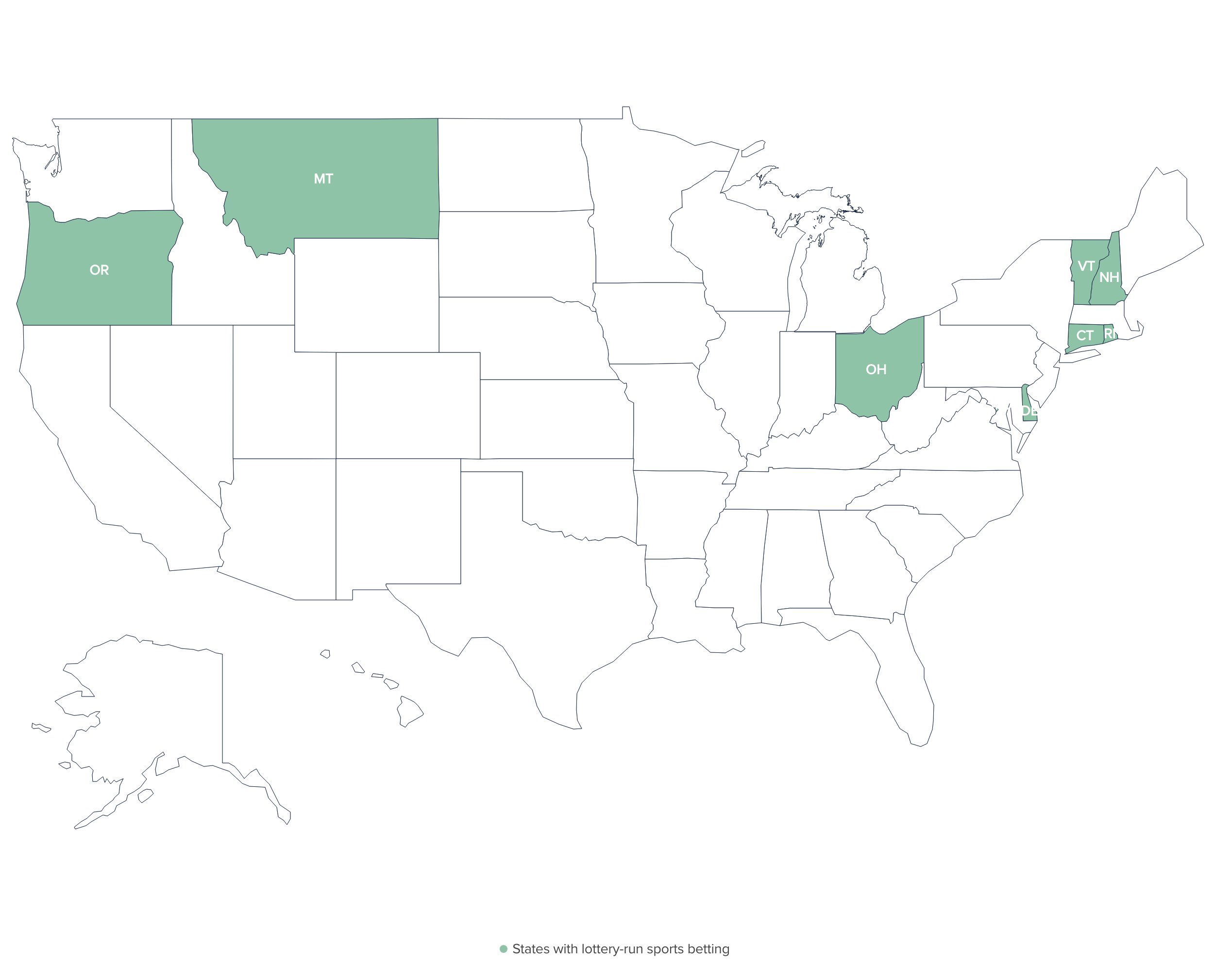
This blog is just a small glimpse of what’s inside our May 2024 Sports Betting Outlook, a monthly report which maps out how the U.S. sports betting landscape is being redrawn after the May 2018 Supreme Court ruling allowing all states to regulate wagering. It allows Vixio customers to compare state laws and key pending bills, identify policy trends and accurately forecast the size and scope of the market both in terms of anticipated legislative developments and projected revenues by participating states.
Get in touch or book a demo with a member of the Vixio team, who can show you how your organisation can use the Vixio GamblingCompliance platform to stay abreast of the U.S. Sports Betting’s regulatory landscape.