
Vixio Intelligence
To keep up to date on Vixio webinars, events and industry and product news,
sign up today
Subscribe NowCross-border payments regulation in the UK, EU, US and APAC: the licensing, AML and safeguarding rules payment companies need to know.
At first glance, cross-border payments can look like a straightforward extension of an existing service: add a currency, connect a payout partner and open a new payment route.
But expanding into cross-border payments also introduces regulatory requirements that vary depending on where your business operates, where payments are sent and received, and which firms are involved in processing them.
As a payment company, you’ll need to consider:
These questions become more complex as you scale, and add payment routes, legal entities and differing customer types.
To help you understand what you need to do to remain compliant, this guide will look at key cross-border payments regulation in the UK, EU, US, and APAC, with practical steps for understanding different requirements and managing regulatory change.
Book a demo to see how Vixio helps payment teams research global requirements and manage regulatory change.
Cross-border payments compliance is challenging because different rules can apply across jurisdictions, depending on the type of payment and the role each business plays in processing it.
For example, a consumer remittance may be subject to different requirements than a business payout. Even within the same payment route, the companies involved may have different regulatory obligations.
Say your company is a UK fintech planning to offer consumer payments to Germany through a bank and local payout partner.
Your compliance team needs to work out:
Working with regulated partners doesn't automatically cover your own obligations. You still need to understand which requirements apply to your business and where each partner's responsibilities begin and end.
These requirements can also change as regulations evolve, you enter new markets or switch payment partners. This means compliance teams must continually monitor developments across jurisdictions, assess which changes affect their business and update their processes to remain compliant.
Key regulations in the UK include:
What you need to know
Key regulations in the EU include:
What you need to know
Key regulations in the US include:
What you need to know
Key regulations in Singapore include:
What you need to know
Key regulations in Australia include:
What you need to know
As you can tell, cross-border payments bring a long list of regulatory obligations: and getting them wrong can be expensive.
In 2024, the FCA fined authorised e-money institution CB Payments Limited £3.5 million for repeatedly breaching restrictions on serving high-risk customers.
And fines are only part of the cost of non-compliance. Firms can also face restrictions on their services, independent reviews, remediation costs, delayed expansion and damage to customer trust. And when you operate across several countries, missing a new requirement or deadline becomes easier.
This is where regulatory change management comes in. Rather than treating compliance as a one-off check before launch, it gives teams a repeatable process to identify the rules that apply, monitor new developments, assess their impact and track the work needed to respond.
Vixio's unified regulatory change management platform brings that research, monitoring and follow-through into one place.
Here's how it helps payment teams manage cross-border requirements:
Before opening a new payment route, you need to know which permissions and obligations apply to your service and where a local banking or payout partner fits in. For instance, Singapore and Australia have different licensing and registration requirements, even for similar payment activities.
Vixio Jurisdiction Reports provide structured regulatory information across more than 200 jurisdictions. You can compare Singapore's MAS licensing requirements with AUSTRAC remittance registration, giving your team a clearer starting point for planning market entry.
For more specific questions, VIQ, Vixio's AI regulatory assistant, helps you search analyst-verified intelligence and check the supporting sources. That makes it easier to investigate a particular obligation or prepare focused questions for local counsel.
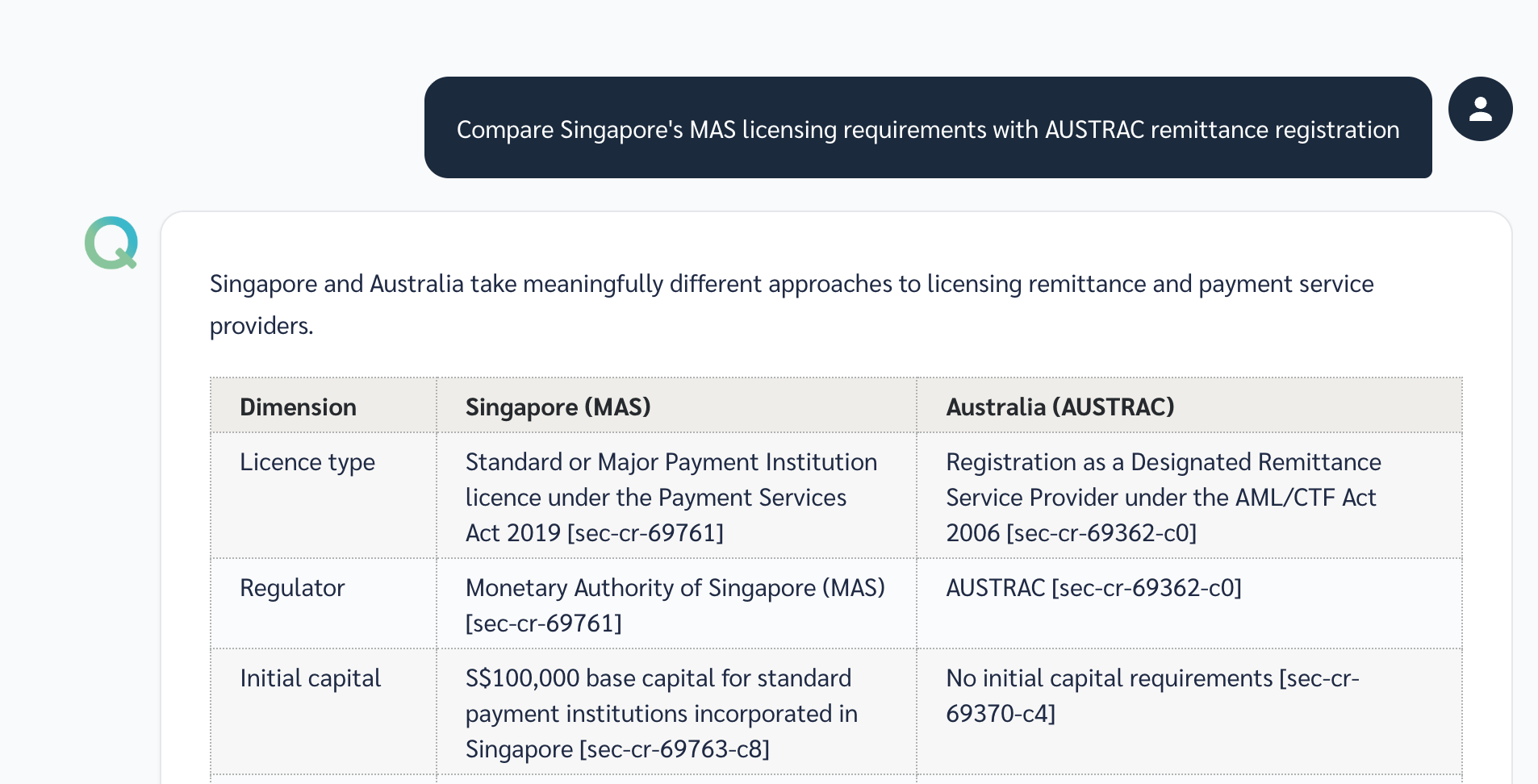
And because VIQ only collects information from inside the platform—and approved by expert human analysts—you can feel confident that you’re getting accurate, up-to-date regulatory data.
Requirements can change after a route goes live. A new safeguarding rule, revised AML guidance or an upcoming implementation deadline could mean changing your processes or systems. The challenge is spotting relevant developments early enough to act.
Horizon Scanning monitors developments from more than 1,400 authorities across 200+ jurisdictions. Watchlists and alerts help you follow the markets and topics relevant to your services, with analyst-backed context to make each update easier to assess.
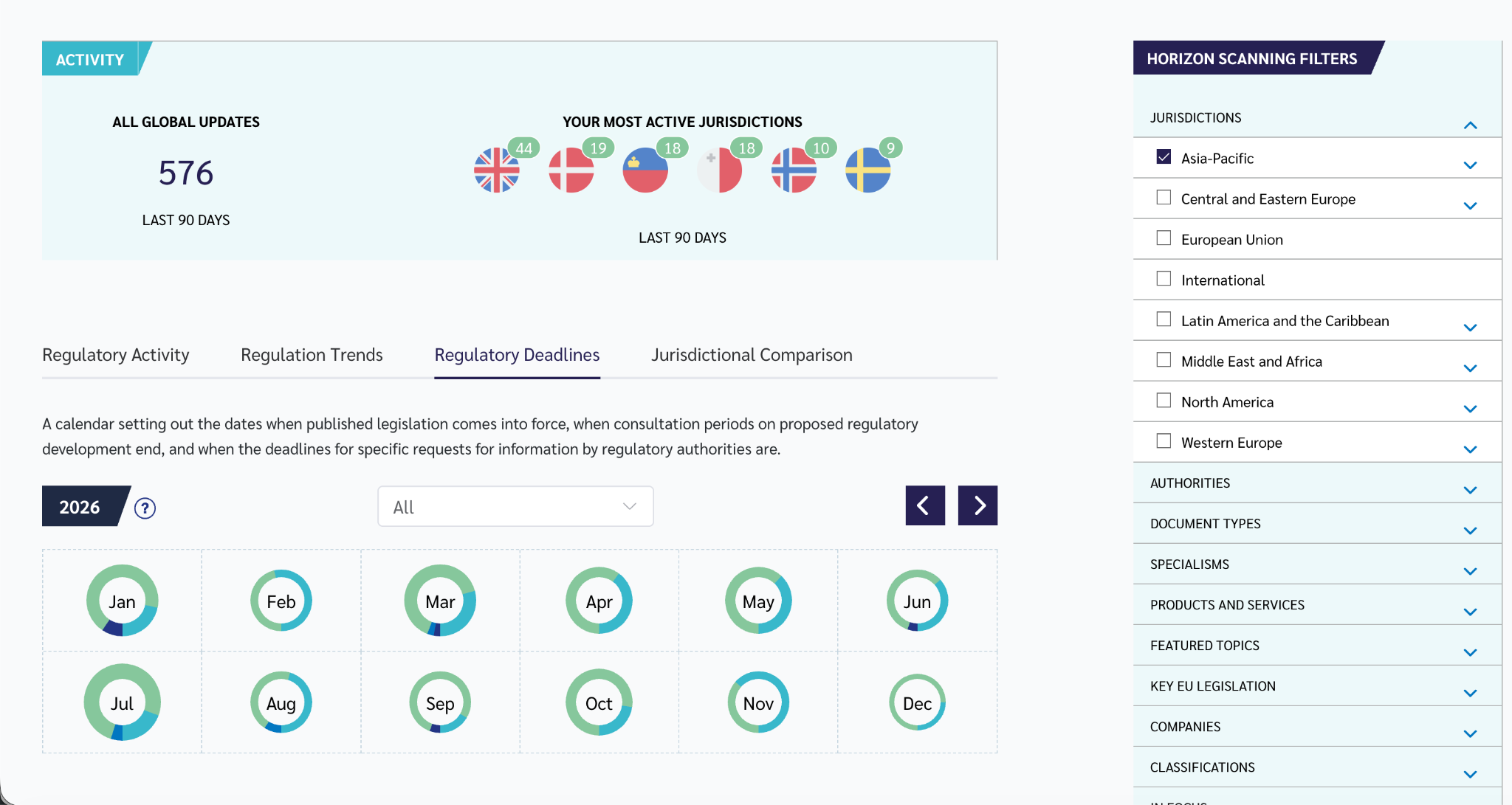
Triage then helps you decide what needs action. You can dismiss updates that don't affect your business or assign relevant ones to the right person with a due date. This helps teams prioritise genuine obligations instead of treating every consultation or announcement as equally urgent.
Spotting a change is only the start. If a regulator introduces new sender-information requirements, your team needs to interpret the rule, check the current payment process for gaps, make any necessary changes and document when the work was completed.
Vixio supports that process:
The result is a clearer record of what changed, how the firm assessed it and what action was taken. That makes it easier to demonstrate progress to internal stakeholders, auditors or regulators, rather than reconstructing decisions from scattered emails and spreadsheets.
From international money transfers to global payment gateways, leading businesses trust Vixio to turn regulatory complexity into confident decisions.
Take Inpay, a cross-border payments provider operating in more than 45 countries. Vixio has become part of its daily compliance routine, helping the team stay informed and manage regulatory risk.
Or FinteqHub, which relies on Vixio's intelligence and expert support to navigate regulatory uncertainty and make better-informed decisions across international markets.
These partnerships demonstrate why payments businesses choose Vixio as a long-term regulatory intelligence partner, not just another compliance tool.
See why global payments companies trust Vixio:
Read Inpay's customer story | Read FinteqHub's customer story
Obligations vary by country, payment route and business activity. Early research helps avoid delays and costly last-minute changes.
Vixio brings regulatory intelligence and compliance workflows together so teams can identify changes and manage their response.
Book a demo to see how Vixio can support your international payments strategy.
Yes. Cross-border payment services can trigger licensing or registration, anti-money laundering (AML), sanctions, payment-information and customer-protection requirements. Which rules apply depends on the service being provided, where it is legally provided, the customer type and each firm's role in handling the transfer.
Often, but not always. A firm may need authorisation, registration or a locally available exemption, depending on its activities and jurisdiction. For example, US FinCEN registration is separate from state money transmitter licensing, while a UK payment institution licence does not give the firm EU passporting rights. Check the proposed service and each relevant entity before launch rather than assuming a partner's licence covers your business.
Map the entities, countries, customers and payout partners involved. Confirm who is providing the regulated service, what permissions each firm needs, and who owns customer due diligence, sanctions screening, transfer data, fees, refunds and complaints. Then document required systems changes and assign owners before committing to a launch date.
The Financial Action Task Force (FATF) sets international standards for tackling money laundering and terrorist financing. Countries implement these through their own laws and regulations, including requirements relating to customer due diligence and information accompanying transfers. FATF recommendations do not automatically create direct obligations for every payment firm; teams must apply the binding rules in each relevant jurisdiction.