
Vixio Intelligence
To keep up to date on Vixio webinars, events and industry and product news,
sign up today
Subscribe NowDiscover the best AI-powered regulatory intelligence tools, including Vixio, and how they help compliance teams monitor changes, assess impact and manage risk.
The best AI-powered regulatory intelligence tools use AI to monitor regulatory changes, assess impact and help teams manage compliance across jurisdictions.
Most modern tools, including Vixio, combine machine learning, NLP and workflow automation to reduce manual research, surface relevant regulatory updates and support ongoing compliance processes.
Vixio is an AI-powered, analyst-curated regulatory intelligence platform designed for payments, financial services and gambling compliance teams operating across multiple jurisdictions.
Unlike tools that rely primarily on automation, Vixio combines machine learning with a structured human analyst layer to deliver intelligence that is both scalable and decision-ready.
A key differentiator is how Vixio connects intelligence to action. Regulatory updates can be converted directly into tracked compliance tasks, giving teams a clear audit trail of how changes were assessed and addressed.
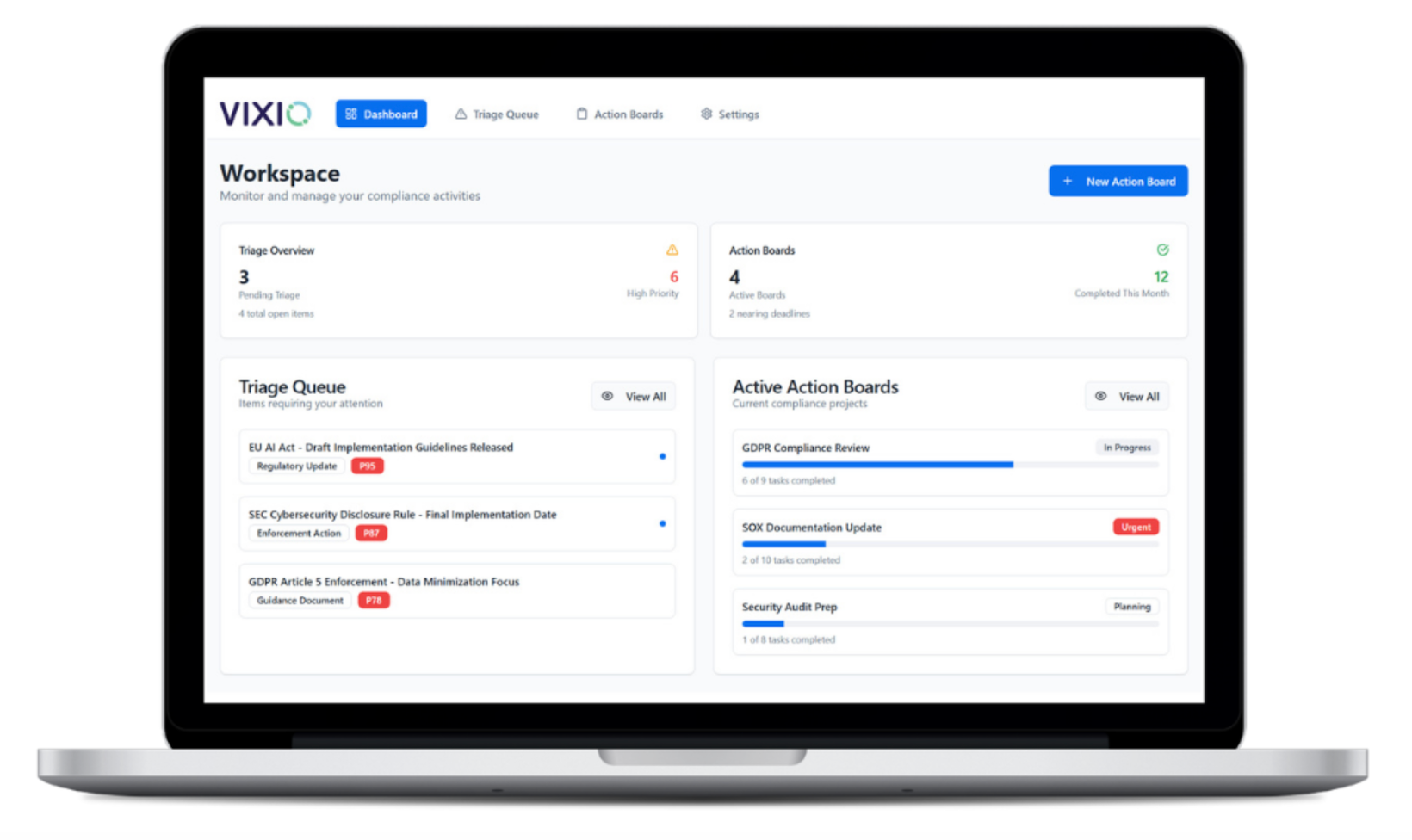
This combination of AI-driven filtering and expert interpretation helps compliance teams focus on what is materially relevant, rather than manually reviewing large volumes of regulatory content.
Best for: Global compliance teams that require highly reliable, traceable regulatory intelligence with strong analyst oversight and built-in workflow support.
When evaluating AI-powered regulatory intelligence tools, compliance teams should look beyond generic “AI-powered” claims and focus on how effectively a platform turns regulatory change into actionable, auditable insight.
Across leading tools, the most important capabilities include:
The most effective platforms integrate these capabilities into a single, unified system, enabling teams to move seamlessly from monitoring to analysis to action, rather than relying on disconnected tools or manual processes.
To see how platforms like Vixio can help your team, book a no-obligations demo today.
It is a platform that uses artificial intelligence to monitor, analyse and interpret regulatory changes, helping compliance teams stay up to date and take action.
They reduce manual research by automatically tracking regulatory updates, filtering relevant information and supporting workflows for managing compliance tasks.
Regulatory intelligence tools focus on understanding and analysing regulatory change, while compliance tools are often used to implement and track internal controls and processes.


.png)